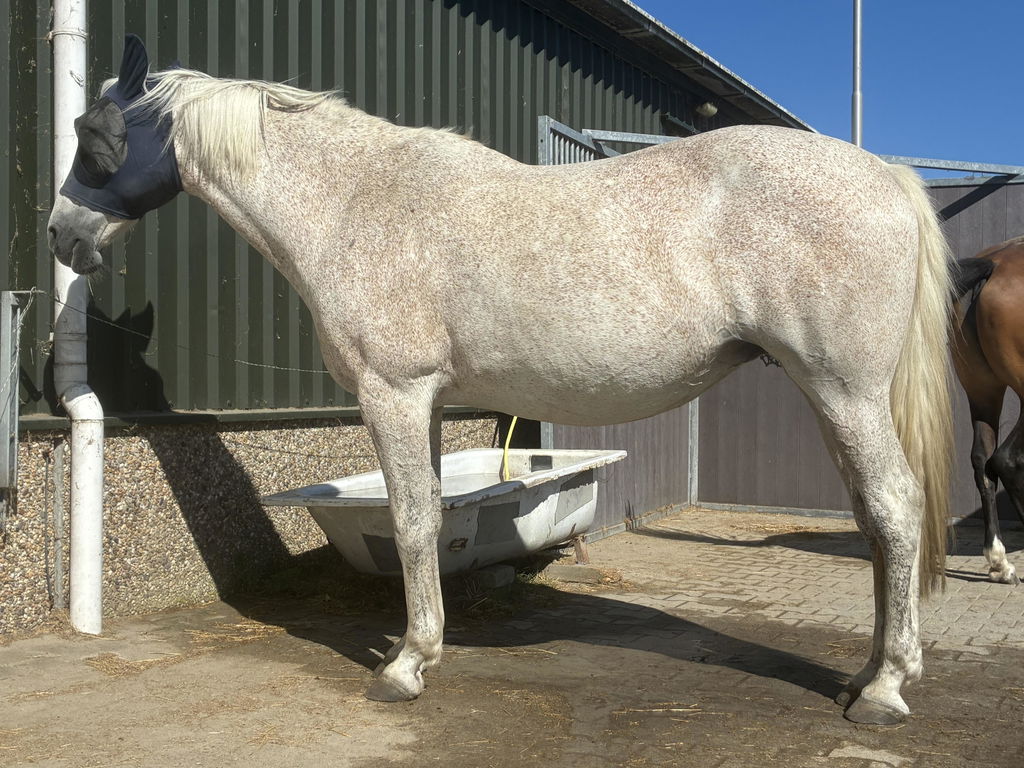

The hay net is empty, your horse is waiting at the stable door, and someone offers you a batch of soft, sweet-smelling haylage. It can feel like an easy answer, especially when your usual hay is dusty or scarce. But haylage versus hay is not simply a choice between “wet” and “dry” forage. The right choice depends on the individual bale, your horse’s health, how the forage is managed, and what the rest of the ration supplies.
For a horse with loose droppings, a history of gastric discomfort, insulin resistance, laminitis, PPID, or an unexplained change in weight, forage deserves particularly close attention. Roughage remains the foundation of the ration. Concentrates and supplements can fill genuine gaps, but they cannot compensate for unsuitable or poorly managed forage.
Haylage versus hay starts with dry matter
Hay is dried in the field until it contains relatively little water. Good hay is usually around 80 to 90 percent dry matter. Haylage is wrapped at a higher moisture level, often containing roughly 45 to 70 percent dry matter, although the range can be wide. Inside the sealed bale, fermentation helps preserve it.
That difference matters because horses eat feed by weight, while their nutritional needs are best assessed on a dry-matter basis. A horse may need around 1.5 to 2 percent of body weight in forage dry matter daily, adjusted for body condition, workload, and veterinary guidance. If you replace 22 pounds of hay with 22 pounds of haylage, you may unintentionally provide much less actual forage.
For example, a 1,100-pound horse receiving hay at 85 percent dry matter gets about 18.7 pounds of dry matter from 22 pounds of hay. The same weight of haylage at 60 percent dry matter provides only 13.2 pounds. The horse may appear to have a generous net, yet still spend too little time chewing and foraging.
This is one reason haylage can be useful for a horse that needs more calories from forage: it may be easier to eat and can be very palatable. But for an easy keeper, a horse with EMS, or a horse prone to laminitis, the amount offered needs careful calculation rather than guesswork.
Sugar cannot be judged by smell or texture
Many owners assume haylage is always lower in sugar than hay. That is not reliable. The grass species, stage of cutting, weather, fertilization, and fermentation all affect the final sugar and starch content. A dry, stemmy hay may be suitable for one horse, while a lush-looking haylage from the same region may be too energy-dense. Or the reverse may be true.
Only a forage analysis can give you a meaningful answer. Ask for dry matter, energy, crude protein, and sugar plus starch values. For horses that need a controlled sugar and starch intake, it is sensible to discuss the results with your veterinarian or qualified nutrition adviser. The laboratory result should be interpreted alongside how much forage the horse actually eats, not as an isolated number.
In practice, owners often make thoughtful decisions about bucket feed while the forage remains untested. Yet forage can make up the vast majority of the daily ration. Once the forage dry matter is calculated and the analysis assessed, the whole feeding plan often becomes much clearer.
Hygiene and storage are where haylage demands more attention
Well-made haylage can be excellent forage. It should smell clean and fresh, have intact wrapping, and be free from visible mold, excessive slime, or a sharp unpleasant odor. However, its preservation depends on an airtight wrap and careful handling. A damaged bale can deteriorate quickly once air enters.
Hay also needs good storage. It should be dry, clean, and free from mold and dust. Dusty hay may be uncomfortable for a horse with sensitive airways, but soaking or steaming should be considered carefully because it changes handling and, depending on the method, can affect nutrients and hygiene.
Haylage is not automatically safer simply because it is wrapped. Check every bale before feeding and remove spoiled material generously rather than trying to salvage it. After opening, feed it within the recommended period for the season and storage conditions. In cool autumn weather it may keep better than during a warm spell, but no opened bale is risk-free forever.
One mare had recurring loose droppings every time a large haylage bale was open for more than a week. Her owner had focused on the mare’s supplements, but the practical issue was bale management: one horse could not use the bale quickly enough. Moving to smaller bales, checking quality closely, and building a consistent forage routine made it easier to assess what truly suited her.
Which forage suits common feeding challenges?
For a horse that struggles to maintain weight, clean and appropriately analyzed haylage can be a practical way to provide more energy from roughage. It may also suit older horses with dental limitations when the texture is easy for them to chew. Still, dental care and a veterinary assessment remain essential if a horse is losing weight, dropping feed, or changing eating behavior.
For horses with EMS, PPID, or a laminitis history, the priority is not whether the forage is called hay or haylage. It is measured intake, suitable energy levels, and a known sugar and starch profile. A low-sugar haylage may fit the ration, but it should not be assumed to be appropriate without analysis.
For horses prone to gastric discomfort, long periods without forage are rarely helpful. Both hay and haylage can support a roughage-first routine when the forage is clean, offered in an amount that suits the horse, and divided so that the horse has regular access. If your horse shows acute pain, colic signs, a major appetite change, or ongoing digestive problems, contact your veterinarian promptly.
For sport horses and horses with muscle concerns such as PSSM or tying up, forage quality, total energy intake, and the wider ration all matter. Choosing forage based on dry matter and laboratory values gives a firmer starting point than choosing by appearance alone.
Make any change gradually and measure it
A sudden move from hay to haylage, or from one batch to another, can make it harder to judge how your horse responds. Introduce the new forage gradually over at least a week where possible, while maintaining enough total forage dry matter. Observe manure consistency, appetite, body condition, water intake, behavior, and workload.
Weigh a typical hay net and a typical haylage portion instead of estimating by flakes or armfuls. Then reassess the ration when a new delivery arrives. Different cuts can vary considerably, even from the same supplier.
When forage is the right foundation but vitamins, minerals, or digestive support are missing from the ration, a product such as EquilinBASIC may help complete the plan without replacing the central role of roughage. The guiding principle remains simple: first establish suitable forage, then add only what the individual horse genuinely needs.
The book The New Feeding Concept by Annette van Weezel Errens, DVM, explains this approach: start with the horse’s natural forage requirement, assess what that forage provides, and fill real gaps thoughtfully rather than adding feeds by habit.
The next useful step is personal nutritional advice from Equilin. Bring your forage analysis, horse’s weight, daily forage amounts, work level, and any veterinary information, so the ration can be assessed as a whole.