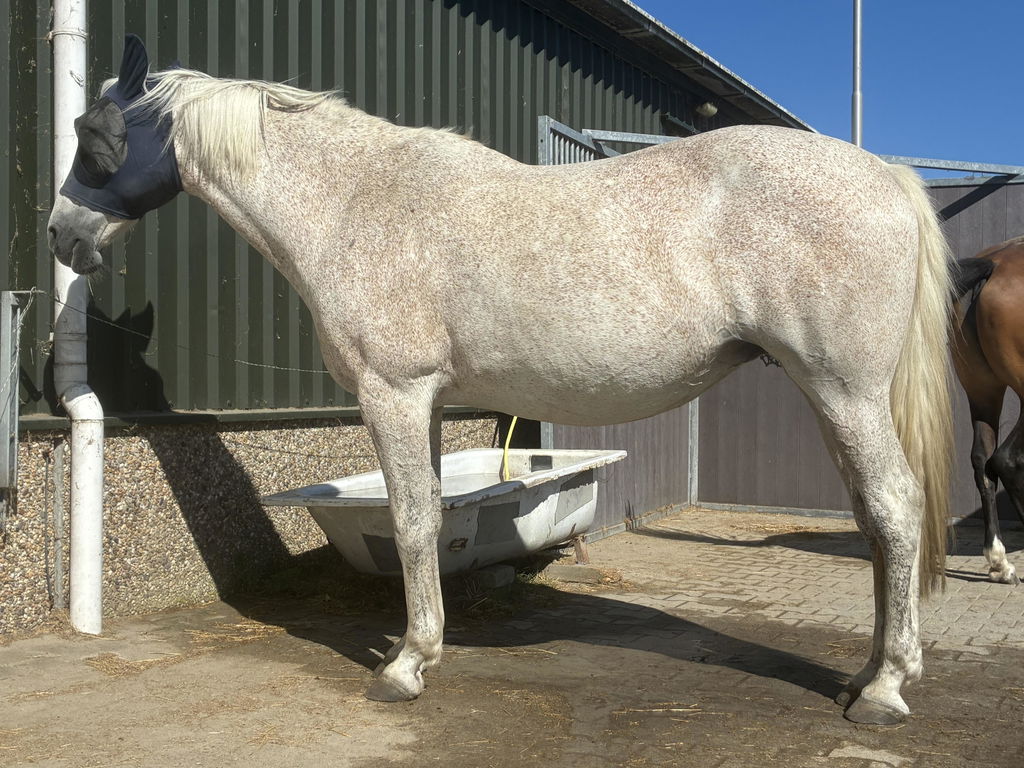

Your horse is eating the same hay as the others in the barn, yet he is gaining weight, leaving loose droppings, or feeling sharper than usual. It is tempting to look first at the bucket feed. But when roughage makes up most of the ration, reading forage analysis reports is often the more useful place to begin. The report does not tell you everything about your horse, but it gives you the numbers needed to stop guessing.
A forage analysis is not a pass-or-fail test. It is a description of one batch of hay, haylage, or grass. Whether that batch suits your horse depends on how much he eats, his body condition, workload, health status, grazing, and the rest of the ration. That is why a good report should lead to a feeding decision, not just a number circled in red.
Start with the sample, not the spreadsheet
A precise laboratory result is only useful if the sample represents what your horse actually eats. Hay from different fields, cuttings, or bales can vary considerably. Haylage can also vary within a wrapped bale, particularly after opening.
Take small handfuls from several bales of the same batch, mix them in a clean bucket, and send the required amount to the laboratory. Avoid sampling only the leafiest or most attractive sections. If you have bought a new load, test that load rather than relying on last year’s report from the supplier.
Also check which method and units the laboratory uses. Results may be shown on an as-fed basis or a dry matter basis. Comparing one report on an as-fed basis with another on a dry matter basis can make ordinary forage look dramatically different. For a meaningful comparison, use dry matter values.
The first figures to read on a forage analysis report
You do not need to become a laboratory technician. For most horse owners, a handful of figures provides the foundation for a better ration.
Dry matter tells you how much forage you are really feeding
Dry matter is the portion left after water is removed. Typical dry hay is often around 85 to 90 percent dry matter, while haylage may contain much more water. A horse eating 22 pounds of haylage is not necessarily receiving the same amount of nutrients as a horse eating 22 pounds of dry hay.
Calculate forage intake in dry matter when you can. As a general starting point, many horses need at least 1.5 percent of body weight in forage dry matter daily, with the right amount adjusted for the individual horse and veterinary advice. This is especially relevant for horses that need weight control, because reducing forage too far can create problems for normal chewing behavior and digestive comfort.
Energy explains weight changes, but not by itself
Energy may be reported as digestible energy, metabolizable energy, or in European reports as units such as megajoules per kilogram of dry matter. Higher energy forage can be useful for a thin horse, a growing youngster, or a horse in demanding work. For an easy keeper, a horse with insulin dysregulation, or one prone to laminitis, the same forage may supply more energy than needed.
Do not judge energy from appearance alone. Fine, soft, leafy hay is not automatically unsuitable, and stemmy hay is not automatically low in calories. The report gives a more reliable starting point, while your horse’s weight trend and body condition show how the ration works in real life.
Sugar and starch deserve careful attention
For horses with insulin resistance, EMS, PPID, a history of laminitis, or a tendency to become overly reactive, the sugar and starch section deserves special attention. Laboratories may list water-soluble carbohydrates, ethanol-soluble carbohydrates, starch, and sometimes a combined value.
The useful number depends on the horse and on the veterinary or nutrition plan. It is not wise to apply one internet cutoff to every horse. A pony with previous laminitis, for example, needs a more cautious approach than a healthy horse in regular work. Forage can also change after soaking, but soaking should not be used as a substitute for knowing the starting value or for managing the whole ration.
If your horse shows acute lameness, pain, colic signs, or a sudden change in appetite or manure, contact your veterinarian promptly. A forage report supports daily management; it does not diagnose the reason for symptoms.
Protein is about quality as well as the total number
Crude protein is often misunderstood. A low protein result does not mean the forage is poor, and a high result does not automatically mean it is ideal. Mature grass hay can be lower in protein and may need balancing for a young, breeding, or hard-working horse. Lucerne, also called alfalfa, is often higher in protein and energy, which may suit some horses well but needs to fit the entire ration.
Look beyond the percentage when a horse is losing topline, growing, lactating, or returning to work. Overall energy intake, amino acid supply, dental comfort, workload, and underlying health all matter. More protein is not a shortcut to more muscle.
Fiber values help describe the forage
Fiber figures such as NDF and ADF help describe maturity and likely digestibility. In simple terms, more mature forage usually has more structural fiber and may provide less readily available energy. That can be useful for some easy keepers, but very coarse forage may be difficult for an older horse or a poor doer to consume in sufficient amounts.
In my practice I often see owners choose the lowest-energy hay they can find for a horse that gains weight easily. The horse then eats slowly, leaves the coarsest stems, and becomes frustrated between meals. A better answer may be a forage with appropriate sugar and energy, offered in a way that allows sufficient intake and longer eating time, rather than simply choosing the toughest hay available.
Minerals show where forage cannot stand alone
Forage is the basis of the ration, but it rarely supplies every vitamin and mineral in the right proportion. Calcium, phosphorus, magnesium, potassium, copper, zinc, selenium, and iron are common report values. Their meaning is not limited to whether a single number is high or low. Ratios and total daily intake matter.
For example, grass forage can naturally contain plenty of iron and potassium while being comparatively modest in copper and zinc. Adding a general mineral product without looking at the forage may duplicate what is already abundant and still leave a real gap. This is why a forage-first ration is not the same as a forage-only ration.
A mare I advised was receiving a generous scoop of several supplements because her coat lacked shine and she was slow to recover after work. Her forage report showed that the forage already supplied some minerals in high amounts, while the ration lacked a clear, balanced foundation. Simplifying the feeding plan and matching the balancer to the forage made the ration easier to manage and easier to assess over time.
For a deeper explanation of this way of building rations, my book, The New Feeding Concept, sets out why roughage comes first and how to fill genuine gaps without turning feeding into a cupboard full of pots.
Reading forage analysis reports in the context of the whole horse
The most useful question is not, “Is this good hay?” Ask, “Is this forage appropriate for my horse at this intake?” Start by writing down your horse’s weight, body condition, forage amount, grazing time, bucket feed, supplements, work level, and relevant veterinary findings. Then place the report beside that information.
A report can help you decide whether to feed more or less of a forage, mix batches, limit grazing, soak hay where appropriate, or use a carefully chosen balancer to complete the ration. It can also show when a horse’s issue is unlikely to be solved by changing one supplement. Loose droppings, weight loss, muscle concerns, sweet itch, and behavior changes all deserve a broad look at management, forage, health, and workload.
Re-test when the forage batch changes, when haylage comes from a new bale group, or when your horse’s needs change significantly. Keep reports with notes on body weight, condition, and feeding amounts. Over time, this builds a much clearer picture than memory alone.
The clear next step is to request personal nutritional advice, bringing your forage report and your horse’s current ration with you. Together, we can translate the numbers into a practical roughage-first plan that fits the horse in front of you.