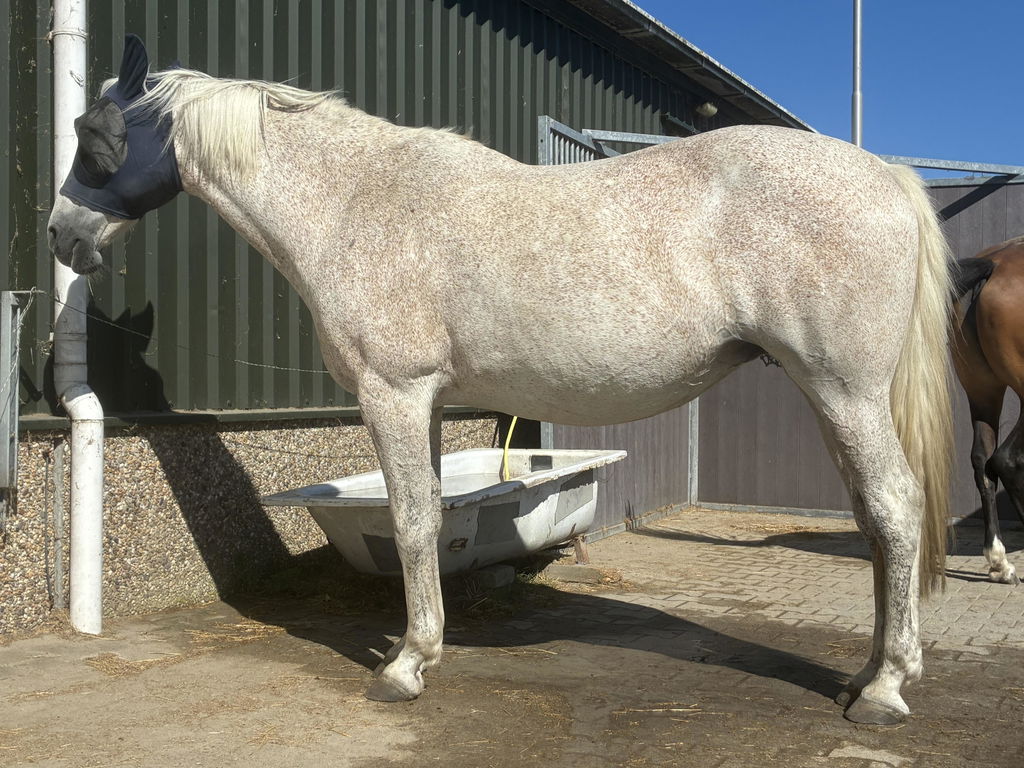

A horse that has always received a simple bucket feed does not need a dramatic change to benefit from a balancer. The best answer to how to introduce horse balancers is usually the quietest one: begin with the forage, make one change at a time, and give the horse time to accept a new routine.
A balancer is not intended to replace good hay, pasture management, clean water, or thoughtful daily observation. It is a concentrated way to complement the base ration when forage alone may not provide the full range of vitamins, minerals, and other nutrients required by the individual horse. Used well, it can make feeding more precise without making it more complicated.
Start With the Ration Your Horse Has Today
Before adding anything, write down what your horse currently receives. Include hay or haylage, grazing time, bucket feed, treats, salt, and every supplement. Also note approximate quantities, not just scoops. A scoop is useful only when you know how much it weighs.
This small exercise often reveals why a balancer may be helpful. Many horses receive plenty of calories through forage, grass, or a conditioning feed, yet their overall ration can still be difficult to assess for vitamin and mineral coverage. Conversely, a horse already receiving the recommended amount of a fortified complete feed may not need an additional concentrated balancer. More is not automatically better.
Consider the horse in front of you as well. Age, workload, body condition, turnout, forage quality, and whether the horse is growing, resting, breeding, or competing all influence the ration. A good feeding plan is individual, even when two horses share a stable and look similar on paper.
This roughage-first approach sits at the center of Annette's book, The New Feeding Philosophy. It begins with the horse's natural need to consume forage regularly, then asks what is genuinely missing from that foundation. That order matters. A balancer should support a sensible forage-led ration, not distract from it.
Choose the Right Type of Horse Balancer
Horse balancers are concentrated products, but they are not all designed for the same purpose. Some are intended as broad daily support for horses on forage-based diets. Others are formulated with a particular life stage, workload, or feeding objective in mind. Read the label carefully and select a product that suits both your horse and the rest of the ration.
The key questions are practical. Is your horse an easy keeper who does not need extra energy from a large bucket feed? Is forage the main source of daily calories? Are you trying to simplify several overlapping products? Or does your horse already receive a fortified feed at its full recommended amount?
If the horse is eating less than the suggested daily amount of a fortified concentrate, a balancer can be a useful way to avoid leaving nutrient intake to chance. If the horse eats the full amount, check whether adding another vitamin and mineral product would duplicate what is already being fed. When in doubt, ask for nutrition guidance based on the complete ration rather than choosing based on one appealing ingredient list.
How to Introduce Horse Balancers Gradually
A gradual introduction gives you the clearest picture of how the horse accepts the product and how it fits into daily management. It also avoids changing several parts of the ration at once, which makes it harder to identify the cause if appetite, manure consistency, or behavior changes.
Start with a small portion mixed into the horse's familiar feed. For a horse that readily eats a bucket feed, this might be a quarter of the intended daily amount for the first few days. Increase slowly over roughly seven to 10 days until you reach the label's recommended amount for the horse's body weight and situation.
For horses that are especially cautious with new feeds, go more slowly. Mix the balancer into a small amount of a familiar, suitable carrier feed rather than introducing it in a large new meal. If the horse does not need additional calories, avoid using a generous serving of a high-energy feed simply to make the balancer more appealing. A small handful of the usual feed is often enough.
Consistency is more useful than speed. Feed the product at the same times each day where possible, use an accurate measure, and keep the rest of the ration stable during the transition. If a horse refuses the feed, do not force the issue by repeatedly adding larger amounts of flavorings or changing the entire bucket meal. Step back, offer a smaller amount, and consider whether the carrier feed, texture, or feeding environment is the real obstacle.
Pay Attention to the Whole Horse
The first days of a new balancer are a good time to observe, not to expect instant transformation. Watch whether the horse finishes the feed willingly, drinks normally, maintains its usual manure output, and remains comfortable with its routine. Daily notes can be surprisingly useful, particularly in a busy barn where different people feed or handle the horse.
Body condition deserves attention too. A balancer is concentrated, but the calories in the overall ration still come primarily from forage, grazing, and any bucket feed. If weight is changing when it should not, look first at the full feeding program, turnout, work level, and forage availability. Do not assume the balancer alone is responsible.
Forage changes can be just as significant as supplement changes. A new hay delivery, changing pasture growth, or moving from summer grazing to winter stabling may alter what the horse receives each day. Revisit the ration when these changes occur rather than treating the feeding plan as fixed for the entire year.
Avoid the Most Common Balancer Mistakes
The most common issue is stacking products without checking their combined contribution. A daily balancer, fortified concentrate, mineral lick, and several condition-specific products may all have a place in a carefully planned ration, but they should not be added casually. Similar nutrients can appear in more than one product.
Another mistake is feeding by volume without confirming the product's weight. Pellets, powders, and granules can settle differently, and scoops are not universal. Weigh the daily amount once with a kitchen scale and mark the correct level on your scoop. It takes minutes and makes every future feed more reliable.
Finally, do not let a concentrated product become an excuse to reduce forage below what the horse needs. Horses are designed to spend much of their day eating fiber-rich forage. The balancer belongs alongside that principle, not in place of it.
When to Seek Individual Advice
A standard introduction may not be appropriate for every horse. Seek individual nutrition advice if your horse has a highly restricted diet, a history of feed intolerance, very limited forage options, unusual weight changes, or multiple feeds and supplements already in use. Growing horses, broodmares, seniors, and horses in demanding work also benefit from a closer look at the complete ration.
Bring useful information to that conversation: the horse's age and approximate weight, clear photos or labels of every product, actual daily quantities, forage type, turnout pattern, and workload. Better information leads to clearer recommendations and fewer unnecessary additions.
A horse balancer works best when it becomes an ordinary, well-measured part of a feeding routine built around plentiful suitable forage. Make the change patiently, keep the plan simple, and let steady observation guide the next step.