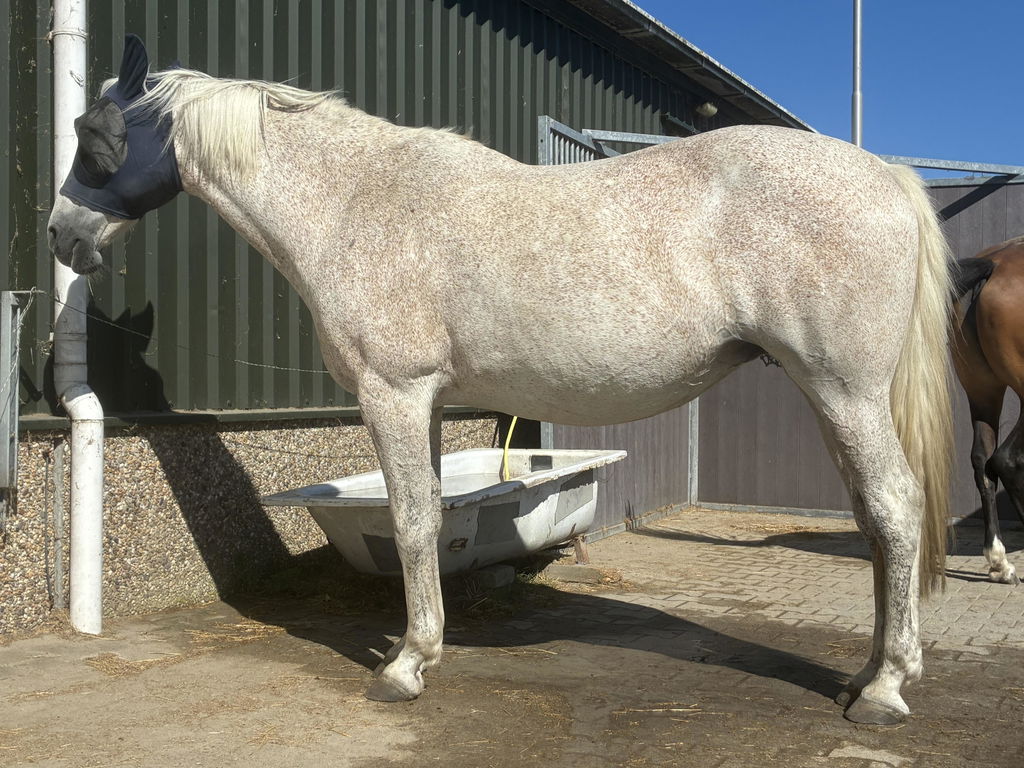

A horse can look well fed and still receive a ration that does not truly fit. A generous scoop of feed, a full hay net, and a supplement chosen for a specific goal may feel reassuring, but feeding becomes clearer when you calculate the complete picture. That is the idea behind bereken het rantsoen - calculate the ration from the horse’s natural needs outward, rather than adding products one by one.
A useful ration is not the same for every horse in the barn. A good-doing pony at light work, a growing youngster, a senior horse, and a sport horse in regular training all need an individual assessment. The starting point, however, remains the same: roughage first.
Bereken het rantsoen from roughage onward
Roughage is the foundation of a horse’s daily feeding plan. Hay, haylage, grass, and other suitable fiber sources provide more than filling material. They determine how much dry matter, energy, protein, and minerals are already present in the ration before any balancer or supplementary feed is considered.
Start by recording what your horse actually eats in 24 hours. Do not estimate from the size of a hay net or the number of flakes alone. Weigh the offered forage and, where possible, the leftovers. If haylage is fed, remember that its moisture content is much higher than hay. Ten pounds of haylage on the scale does not provide the same amount of dry matter as ten pounds of dry hay.
Forage should be assessed on a dry-matter basis. This makes different forage types comparable and gives a more realistic view of intake. It is also why a forage analysis is so valuable. Appearance and smell can tell you whether forage seems clean and appetizing, but they cannot reliably show its energy, protein, sugar, or mineral content.
A practical calculation begins with four questions: What does the horse weigh? How much roughage does it consume? What does that forage contain? What is the horse asked to do each day? Together, those answers create a ration you can review with purpose instead of guesswork.
Start with the horse in front of you
A weight tape is a useful starting tool, especially when used consistently. For greater accuracy, use a scale when one is available. Then consider body condition alongside the number on the tape. Is the horse maintaining a stable outline? Are the ribs easy to feel without being prominent? Is there unwanted fat along the crest, shoulders, or tailhead? Has the horse’s shape changed since the last season or change in training?
Workload matters, but labels such as “light work” or “medium work” can be misleading. A horse ridden quietly three times a week has different requirements than one schooling five days a week, traveling often, or competing regularly. Growth, age, pregnancy, lactation, weather, turnout, dental status, and recovery periods can all alter the ration as well.
This is why feeding plans should be reviewed, not set once and forgotten. The right ration in summer turnout may not be right when stabled routines, forage batches, or training schedules change.
Use body condition as a check, not the only answer
Body condition is a valuable result of the ration, but it cannot reveal every gap. A horse can maintain weight while still receiving an unbalanced supply of vitamins, trace elements, or essential amino acids. Likewise, weight loss does not automatically mean that concentrate feed should be increased. First check forage intake, forage quality, management, workload, and whether the horse is able to eat comfortably.
The goal is not simply to add more. It is to make each part of the ration earn its place.
Compare supply with daily needs
Once forage intake and its analysis are known, compare what it supplies with the horse’s estimated daily needs. This is where the ration becomes more precise. You can see whether the base ration already supplies plenty of energy, whether protein is limited, or whether mineral intake is unlikely to match the horse’s needs.
For many easy keepers, forage provides sufficient or even generous energy. In that situation, adding a large amount of traditional concentrate feed simply to provide vitamins and minerals can make the ration less suitable. A concentrated balancer may be a more logical choice because it is designed to complement the forage without unnecessarily increasing the overall feed quantity.
For horses with higher energy requirements, additional feed may be appropriate. Yet even then, the choice should follow the forage assessment. A horse does not need a fashionable ingredient. It needs a ration that closes identifiable gaps while remaining practical, palatable, and consistent.
Be careful with overlap. Multiple supplements can unintentionally duplicate the same nutrients, particularly when a horse receives fortified feed, a balancer, loose minerals, and several condition-specific products. More is not automatically better. A clear feeding plan helps avoid both omissions and unnecessary stacking.
Build the ration in a sensible order
The New Feeding philosophy, described by Equilin founder Annette in her book The New Feeding Concept, offers a helpful order of thinking: begin with the horse’s natural roughage needs, assess what modern forage may not provide, and then add only what serves a clear purpose.
In daily practice, that means building the ration in layers:
- First, provide suitable roughage in an amount that fits the horse and its management.
- Next, assess forage quality and dry-matter intake, ideally with an analysis.
- Then, balance vitamins, minerals, and other nutrients that are not sufficiently covered by the base ration.
- Finally, consider targeted supplementary feed only when it fits the individual horse, its life stage, and its feeding objective.
Keep measurements practical at the barn
Precision does not have to make feeding stressful. A small digital scale, a written feeding chart, and regular observations will improve accuracy more than relying on memory. Weigh each feed once, note the volume in your usual scoop, and write that conversion down. A scoop is a volume measure, while feed labels are typically based on weight. The difference can be substantial between products.
Record changes in forage batch, turnout hours, training, body condition, and feed amounts. This is particularly useful when several people care for the same horse. It also helps you identify what changed when the horse’s appetite, weight, or manure consistency differs from its usual pattern.
Introduce ration adjustments gradually where possible. Sudden changes make it harder to observe how a horse responds and may disrupt a settled feeding routine. If a horse has ongoing concerns around appetite, weight, chewing, or general well-being, seek guidance from a veterinarian and a qualified equine nutrition professional.
When a starter package can be useful
Owners often know their horse needs a more structured plan but feel uncertain about where to start. In that case, a starter package can make it easier to establish a simple routine based on forage, a suitable balancing product, and carefully chosen additions. The key is to choose it as part of the whole ration, not as a shortcut around calculating it.
Equilin’s approach is designed around that practical principle: make proper feeding clear again, beginning with what the horse is meant to eat most.
Recalculate when the horse’s life changes
A ration calculation is a working document, not a permanent verdict. Revisit it when you open a new forage batch, move yards, change turnout, increase training, begin a breeding program, or notice a sustained change in body condition. Seasonal changes deserve attention too. Winter forage intake, summer grass exposure, and work levels rarely remain identical throughout the year.
The most reassuring feeding plan is not the one with the longest list of products. It is the one you can explain clearly: this is what the horse eats, this is what the forage provides, and this is why each remaining part of the ration is there. That clarity gives you a more confident basis for every bowl you prepare.