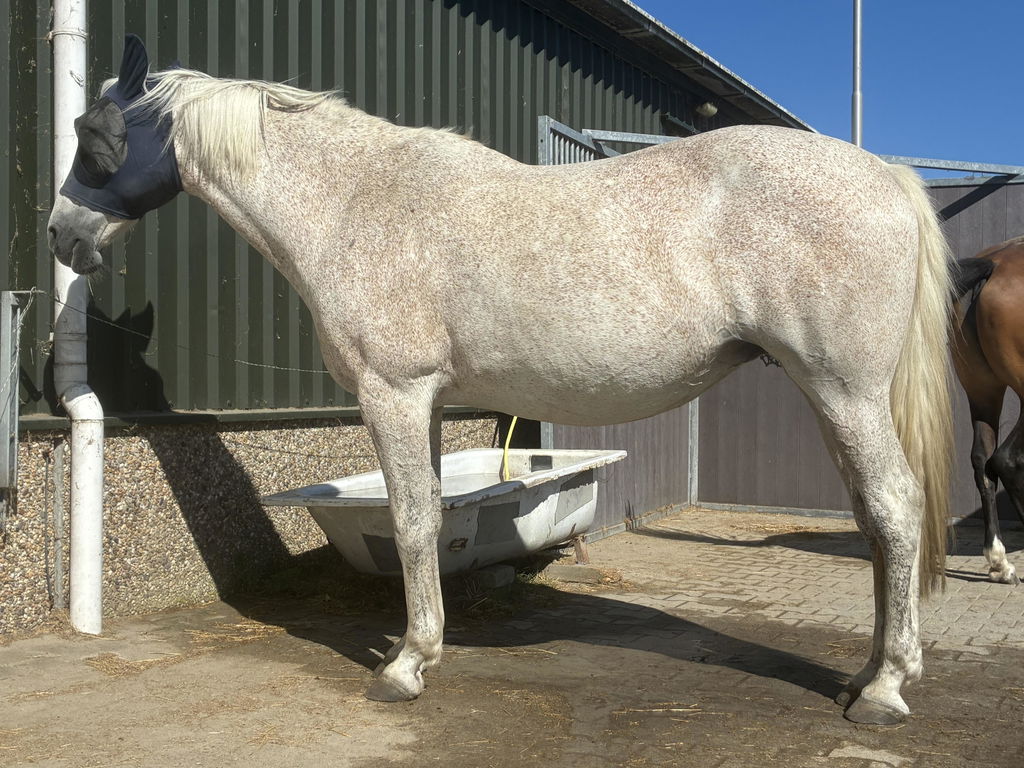

The evening feed is ready, the stable is quiet, and you are looking at several tubs and scoops while wondering what truly needs to go in the bucket. A good supplement feeding schedule should make this moment simpler, not turn it into a daily calculation exercise. The starting point is not the supplement. It is the forage your horse has eaten, the nutrients already supplied by the ration, and the reason you are adding support in the first place.
For a horse with loose droppings, a sensitive stomach, EMS, PPID, a history of laminitis, or muscle concerns, timing and consistency can matter as much as the product itself. Yet more supplements or more feeding moments are not automatically better. Proper feeding becomes clear again when we first build a forage-based ration, then fill genuine gaps with a balanced, practical plan.
Start the supplement feeding schedule with forage
A horse is designed to eat fiber for much of the day. Hay, haylage, grass, or another suitable fiber source does more than provide calories: it supports chewing time, saliva production, gut function, and natural feeding behavior. Before deciding when to feed a supplement, make sure the horse has enough appropriate forage and that long periods without forage are avoided where possible.
This is particularly relevant in late fall and winter, when many horses spend more time indoors and pasture intake changes. A horse may look settled in the stable but still have a ration that is very different from its summer routine. New hay, a different haylage batch, less grass, reduced work, or a thicker winter coat can all change what the horse needs.
Forage should also guide the type of bucket feed used to carry a supplement. Most supplements can be mixed into a small, suitable fiber feed, soaked hay pellets, or another low-starch carrier that fits the horse. There is no nutritional advantage in adding a large grain-based meal simply because a supplement needs a spoonful of feed.
For horses that gain weight easily or suit a ration for EMS, PPID, or laminitis management, the carrier deserves extra attention. Keep it small, weigh it rather than estimating by volume, and choose it according to the overall ration. Your veterinarian should remain involved in diagnosis, acute laminitis signs, pain, or any sudden change in your horse’s condition.
What a practical daily rhythm looks like
The best schedule is one you can follow accurately every day. Most supplementary feeds do not require an elaborate timetable. Consistent daily intake is usually more valuable than a perfectly timed scoop that is skipped whenever life gets busy.
A simple rhythm often works well:
- Offer forage before and between bucket feeds, with suitable access through the night.
- Feed the daily supplement with a small fiber-based meal at the same time each day where practical.
- Split the amount over two meals only when the feeding rate is substantial, the horse eats small meals better, or the product directions recommend it.
- Adjust the bucket feed when work, forage, body condition, or health management changes, rather than automatically increasing supplements.
Do not mix a new supplement into the only meal your horse receives right before travel, a competition, or veterinary treatment. Introduce dietary changes at home, when you can observe appetite, droppings, behavior, and water intake. A gradual introduction over several days is often sensible, especially for horses with sensitive digestion.
Keep the ration separate from the supplement list
This distinction prevents many common feeding mistakes. A balancer is part of completing the nutrient supply when forage alone does not provide sufficient vitamins, minerals, and trace elements. A targeted supplement has a more specific purpose, such as supporting digestion, muscle function, skin, or seasonal resilience. They may both be useful, but they should not be selected simply because the horse has a long list of symptoms.
In my practice I often see horses receiving several products that overlap in minerals, magnesium, herbs, or amino acids. The owner is trying to help, but the full ration has never been added up. In that situation, changing the feeding time does little. First, list everything the horse receives, including forage, pasture, concentrates, treats, salt, and every scoop from a tub. Then check whether each item has a clear role.
This is the thinking behind The New Feeding Concept: forage first, then a foundation that completes real gaps, then targeted support only where it adds value. If you would like to understand that approach in more detail, the book is available here: https://equilin.eu/en/products/the-new-feeding-concept-english
Timing around work, turnout, and sensitive digestion
A supplement is not a substitute for good daily management. A horse prone to digestive sensitivity benefits from a routine that considers forage access, stress, turnout, workload, dental comfort, and changes in hay as well as the bucket feed. For a horse in regular work, avoid making the concentrated feed meal immediately before intense exercise. Allow time for the horse to eat calmly and digest.
For horses with muscle concerns, including those managed for PSSM or a history of tying up, the wider ration matters greatly. Energy sources, starch and sugar intake, body condition, exercise routine, electrolyte provision, and veterinary guidance all need to work together. A supplement may support the ration, but it cannot correct inconsistent exercise or a feed plan that does not suit the horse.
A mare I advised was losing topline despite receiving several supplements twice daily. Her owner assumed the answer was a third feeding moment. We found that her forage supply had changed, her workload had increased, and her mineral product was being fed below the amount needed for her body weight. By checking the forage-first ration and setting one consistent morning and one evening feed, the plan became easier to manage and far more logical. Her veterinarian remained involved because unexplained weight loss always deserves proper assessment.
For horses with loose droppings, do not make several changes at once. Keep the feeding times stable, introduce one adjustment at a time, and make notes for at least a week. Consider recent changes in forage, turnout, stress, worm control planning, medication, and drinking as well. Contact your veterinarian promptly if droppings are very watery, the horse seems unwell, has colic signs, shows pain, or stops eating.
Review your schedule when the horse changes
A feeding schedule is not something you set once and forget. Review it when you open a new forage batch, bring a horse in from pasture, change training intensity, notice weight gain or loss, or enter a new life stage such as growth, breeding, or retirement. In late fall, this review can be especially useful because forage and exercise often change at the same time.
Use a notebook or phone note to record the horse’s body weight or weight tape result, body condition, workload, forage amount, and all feeds. This is not about chasing perfection. It gives you a calm overview and helps you spot whether a change is truly helping before adding something else.
Your next step is to request personal nutritional advice so we can look at the whole ration, not just the supplement scoop: https://equilin.eu/en/pages/nutritional-advice