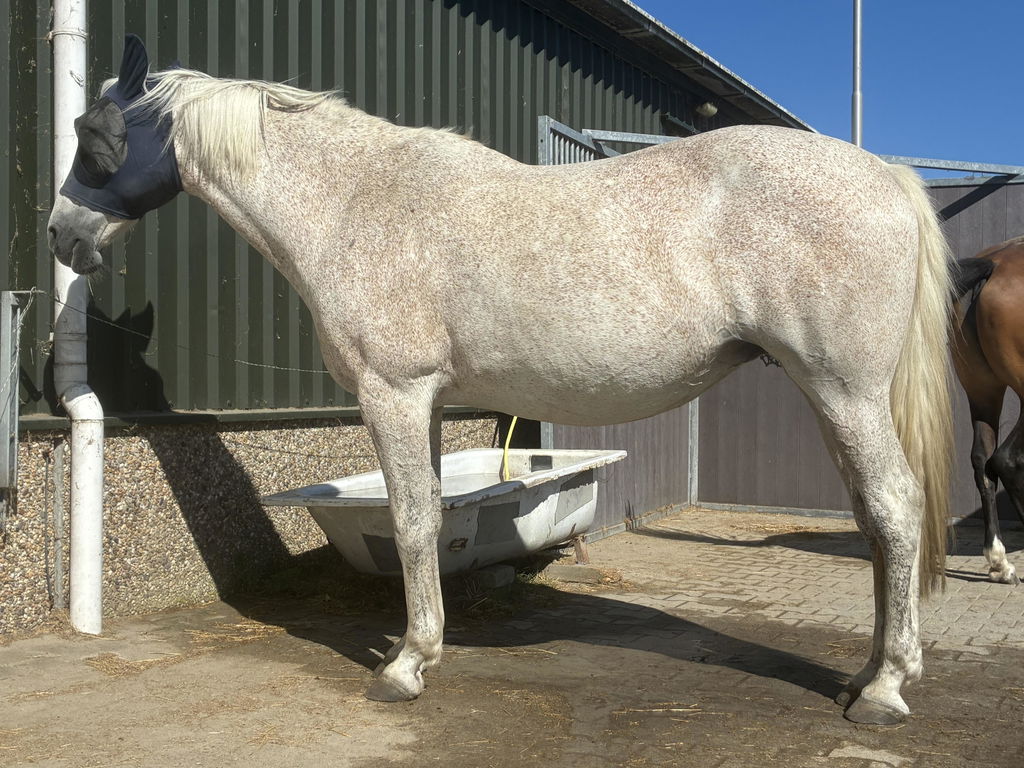

The mare has foaled, the foal is bright and nursing, and suddenly the feed room question becomes much more urgent: is she getting enough? Mare lactation nutrition is not about pouring a bigger scoop into the bucket. It is about supporting milk production while keeping the mare’s digestion, body condition, and mineral intake in balance.
This matters especially as forage quality changes through late autumn and winter. A mare may look as though she has plenty of hay in front of her, yet lose condition because the forage is lower in energy or protein than expected. At the same time, an overly generous cereal-based ration can create problems of its own, particularly for mares that are sensitive to starch or have a history of laminitis, insulin dysregulation, or digestive sensitivity.
Why the first weeks place such high demands on a mare
Milk production rises rapidly after foaling and is usually highest during the first one to two months. A nursing foal depends heavily on that milk, so the mare’s need for energy, high-quality protein, water, and minerals increases considerably.
But a lactating mare should not be fed as though she were a machine that simply needs more calories. Her digestive system is still designed for frequent forage intake. The foundation remains free access to suitable roughage, ideally assessed by weight and, where possible, by forage analysis. Only then can you see what truly needs to be added.
In practice, the concentrate ration of a mare is often increased quickly after foaling, while her hay has not been weighed or tested. The owner is trying to do the right thing, but the mare may still lack protein, certain trace minerals, or total forage dry matter. More feed is not always the answer. The right balance is.
Start with forage, not the feed bucket
A lactating mare should spend much of the day eating. Good hay, haylage, grass, or a suitable combination provides fiber for the hindgut and forms the basis of her energy supply. The exact amount depends on her size, condition, milk yield, pasture access, and the dry matter content of the forage.
Forage quality can vary enormously. Mature hay may provide plenty of fiber but relatively little energy and protein. Rich grass can provide more energy than expected, yet its sugar content may be unsuitable for a mare with a metabolic history. A forage analysis gives a far clearer starting point than judging hay by smell, color, or how eagerly the mare eats it.
If a mare is maintaining condition easily on good pasture and hay, she may need only modest additional energy. If she is losing weight despite eating well, the first question is whether she has enough forage available, not whether she needs a larger grain meal. For mares needing extra condition, choose feeds that complement forage rather than replace it.
Watch body condition weekly
The nursing mare should not become ribby or hollow through her topline, but she does not need to become fat either. Run your hands over her ribs, shoulder, neck crest, and tailhead every week. Photographs taken from the side and behind can help you notice gradual changes that are easy to miss day to day.
Weight loss can be a sign that the ration does not meet demand, but also consider dental comfort, worm control plans, stress, pain, or an underlying health issue. Contact your veterinarian promptly if a mare seems unwell, painful, has colic signs, a sudden loss of appetite, or a marked change in droppings.
Energy and protein: increase thoughtfully
Lactation requires more energy, but the best source depends on the mare and the forage. Fiber and digestible forage-based energy are often a useful starting point. When more energy is needed, feeds should be introduced gradually and divided into small meals. Large concentrate meals can overload the digestive system and work against the roughage-first approach.
Protein quality matters as much as the crude protein percentage. The mare needs adequate essential amino acids to support milk production and maintain her own muscle. This is particularly relevant when forage is late-cut, weathered, or low in protein. A ration based on forage analysis can show whether extra protein is actually needed.
For a mare with PSSM, recurrent tying up, insulin dysregulation, EMS, or a previous laminitis episode, the choice of additional energy needs extra care. These mares can still lactate successfully, but the ration must suit their individual situation. Do not assume that a standard breeder feed is automatically appropriate. Discuss the wider feeding plan with your veterinarian and an equine nutrition professional, especially if medication or a medical diagnosis is involved.
Minerals are not optional during lactation
A mare can appear well fed while her mineral supply is incomplete. Calcium and phosphorus are essential for her own tissues and milk production, while copper, zinc, selenium, iodine, and vitamin E have important roles throughout the ration. The challenge is that forage already contributes some of these nutrients, and levels differ greatly between regions and forage batches.
This is why adding several separate supplements “just in case” can create a less balanced ration. Selenium and iodine, in particular, should be supplied carefully. A balanced vitamin and mineral supplement can be useful when forage makes up most of the diet, but it should be selected according to what the mare already receives from pasture, hay, compound feed, and salt.
One mare was losing a little topline six weeks after foaling, even though she was receiving a generous breeder concentrate. Her hay analysis showed that the forage was lower in protein than expected, while the full concentrate amount supplied more starch than was ideal for her sensitive digestion. Suitable forage support was increased, the concentrate was adjusted rather than simply raised, and the mineral balance was checked. Her condition stabilized without making meals larger and heavier.
For owners who need to complete a forage-led ration, a carefully measured balancer can make sense. EquilinBALANCER is designed to complement a roughage-first feeding plan with vitamins and minerals, rather than turning the bucket into the main part of the diet.
Water, salt, and practical daily checks
A lactating mare drinks a surprising amount. Milk is largely water, so clean, fresh water must always be available. Check troughs in cold weather as well as hot weather. A reduced water intake can quickly affect appetite, manure consistency, and overall comfort.
Salt is equally easy to overlook. A salt block is useful, but it does not tell you how much a mare is actually consuming. Depending on her work, weather, forage, and individual needs, measured salt may be appropriate within a ration plan. Do not add electrolyte products routinely without considering the whole diet and access to water.
Daily observation is one of the most valuable tools you have. Is she eating forage steadily? Is she drinking normally? Are her droppings formed? Does she finish her meals calmly? Is the foal nursing well and growing as expected? These details often reveal more than a single weigh tape measurement.
Plan ahead as the foal begins eating more
From around two to three months onward, the foal will gradually consume more forage and feed, while milk becomes a smaller part of its total intake. The mare’s ration may need adjusting as her milk output changes, her workload resumes, or pasture conditions shift.
Do not keep the highest-lactation ration in place by habit. Reassess body condition, forage availability, and the amount of feed left after each meal. The principles in The New Feeding Concept by Annette van Weezel Errens, DVM, begin with this same question: what does the horse receive from forage first, and what real gap remains to be filled?
A calm, well-conditioned mare and a thriving foal are built from many small, consistent feeding decisions. For a ration tailored to your mare, forage, and her individual sensitivities, request personal nutritional advice from Equilin.