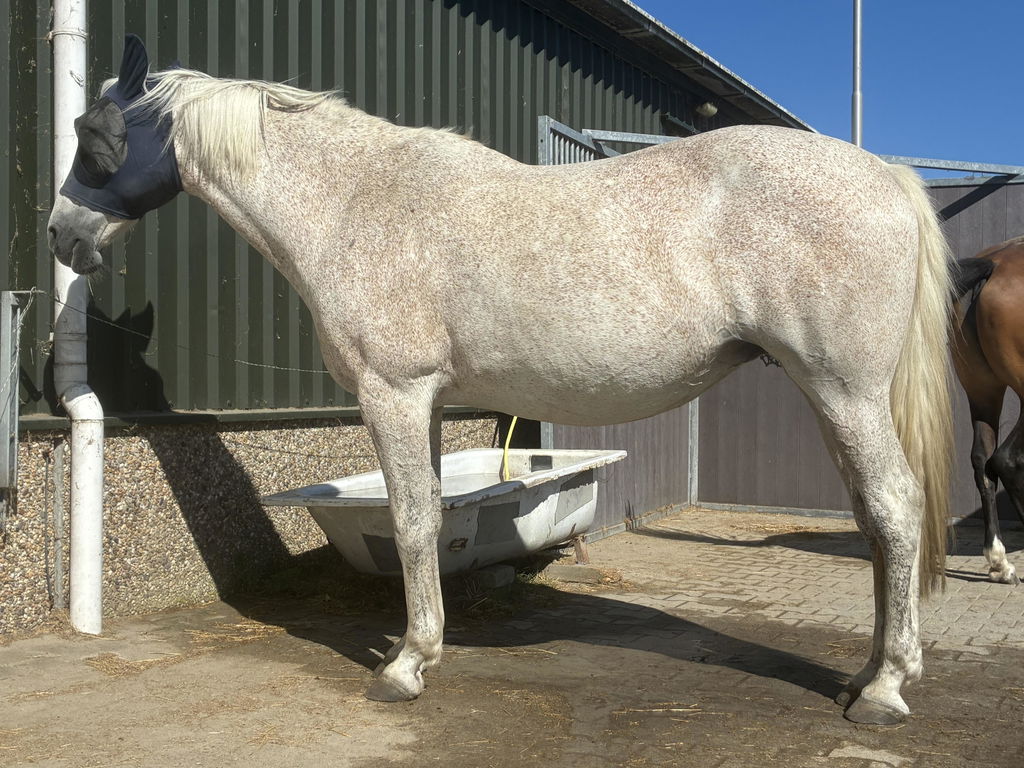

A chipped hoof after a wet week, shoes that no longer hold well, or a crack that seems to creep upward can make feeding feel suddenly urgent. Yet horse hoof nutrition is rarely about finding one “hoof supplement.” Hoof horn is built slowly, from the inside out, and reflects the whole ration, the horse’s metabolism, hoof care, footing, and health over many months.
That is why I begin with the same question for every horse: what is the horse eating before anything is added? A good hoof plan starts with enough suitable forage, then checks whether the ration supplies the building blocks that hoof tissue needs. This approach is calmer, more effective, and often more economical than adding several products without knowing what is already present.
Why hoof quality starts months before you see it
The visible hoof wall is made of keratin, a tough protein structure. A new hoof wall grows down from the coronary band, so a change in nutrition today will not repair an old crack next week. Depending on the horse and the hoof, full hoof-wall replacement can take close to a year.
This time frame matters. If a horse’s hooves seem brittle in fall, look beyond the weather and ask what changed during the previous season. Was hay introduced gradually? Did pasture intake change? Did the horse lose condition, have loose droppings, experience stress, or begin a new workload? Hooves can be one of the last places where an unbalanced ration becomes obvious.
In my practice I often see owners focus on biotin immediately. Biotin can be useful where the overall ration is already well built, but it cannot compensate for too little quality protein, an unsuitable mineral balance, or a horse that is simply not eating enough forage. The foundation always comes first.
The foundation of horse hoof nutrition
Forage provides more than fiber
Forage should be the center of the ration because it supports natural chewing behavior, digestive function, and steady nutrient intake. The exact amount and type depend on the horse’s body condition, health status, pasture access, and workload. A horse prone to insulin dysregulation, EMS, or laminitis may need a more carefully selected, lower-sugar forage plan than a horse struggling to maintain weight.
This is particularly worth reviewing in autumn, when pasture changes and new hay batches often enter the ration. Hay can look and smell good while still varying considerably in energy, protein, sugar, and minerals. If hoof quality, manure, weight, or behavior has changed, a forage analysis can turn guesswork into a useful feeding decision.
For a horse with a history of laminitis, digital pulse changes, marked hoof soreness, or sudden reluctance to turn, contact your veterinarian promptly. Nutrition can support the long-term ration, but acute pain and diagnosis always need veterinary assessment.
Protein quality matters, not just protein percentage
Hoof horn needs amino acids, the components of protein. Lysine and methionine are often especially relevant because they can be limiting in forage-based diets. A horse may appear to receive plenty of feed by volume while still lacking enough high-quality protein for muscle maintenance, topline, coat, and hoof growth.
This does not mean every horse needs a high-protein feed. Excessive or unnecessary additions are not the goal. It means assessing the entire ration, especially for young horses, broodmares, older horses, hard-working sport horses, and horses on mature grass hay. Their needs and forage intake can differ greatly.
A mare I advised had flaky hoof walls and was losing topline after her foal was weaned. Her owner had already tried several hoof products. When we reviewed the ration, the mare’s hay intake was reasonable, but the total supply of quality protein and key minerals did not match her condition and recovery needs. We simplified the feeding plan, balanced the ration around her forage, and gave the hoof growth time. Her farrier noticed the stronger new growth at the coronary band before the older damaged horn had grown out.
Minerals work as a team
Zinc, copper, and manganese all contribute to normal tissue formation and enzyme activity. Their balance matters as much as their presence. For example, high iron levels in forage or water may affect how copper and zinc are utilized. Adding a single mineral without understanding the forage can create a ration that looks complete on a label but is less balanced in the bucket.
Calcium and phosphorus also deserve attention, particularly in growing horses and breeding stock. A correct balance supports the developing skeleton, while a poorly planned ration can introduce avoidable risk. This is one reason a broad, forage-led balancer is often more useful than choosing nutrients one by one.
Biotin is commonly associated with hoof quality because it has a role in keratin formation. It may support hoof horn in some horses when fed consistently and in an appropriate amount. Still, it works best as part of a complete approach, not as a shortcut around gaps in forage, protein, trace minerals, or calorie intake.
Energy and metabolic health cannot be separated from the hoof
A horse that is underfed may not have enough energy and nutrients available for healthy growth. At the other extreme, a horse receiving more sugar and starch than suits its metabolism may face very different challenges. This is especially relevant for horses with EMS, PPID, or a history of laminitis.
For these horses, the right question is not simply, “What supplement is good for hooves?” Ask whether the forage, pasture management, body condition, and concentrate feed suit the horse’s individual metabolic needs. Make feeding changes carefully and with your veterinarian’s guidance where clinical conditions are involved.
What feeding alone cannot solve
Even an excellent ration cannot correct every hoof problem. Hoof balance, trimming or shoeing intervals, moisture conditions, movement, genetics, trauma, and infection can all influence what you see. A horse standing in persistently wet conditions may have softer horn, while very dry footing can contribute to cracking. Neither situation automatically proves a nutritional deficiency.
Look at the whole picture with your farrier and veterinarian. Is the new horn growing in with better density and integrity? Is the horse comfortable? Are cracks superficial, or do they involve sensitive structures? Is there heat, swelling, odor, discharge, lameness, or a sudden change in stance? Those signs call for professional assessment rather than another feed change.
A practical hoof-ration check
Start by writing down everything the horse consumes over a normal week: hay or haylage, pasture time, concentrates, balancers, treats, grazing products, and supplements. Include approximate amounts, not just product names. Then check three things: whether forage is sufficient and appropriate, whether the horse receives enough quality protein for its stage of life and work, and whether vitamins and minerals are balanced to the forage rather than layered on top of each other.
Keep the plan simple. Introduce only necessary changes, feed them consistently, and photograph the hooves at regular farrier visits. The line of healthier new growth at the coronary band can tell you more than daily inspection of old hoof wall.
For a deeper understanding of building a ration from forage outward, my book, The New Feeding Concept, explains the principles behind this approach in practical terms. The aim is not a complicated feeding program. It is to make proper feeding clear again, so each addition has a reason.
If you are unsure whether your horse’s current ration supports hoof quality alongside its individual needs, the clearest next step is personal nutritional advice from Equilin.