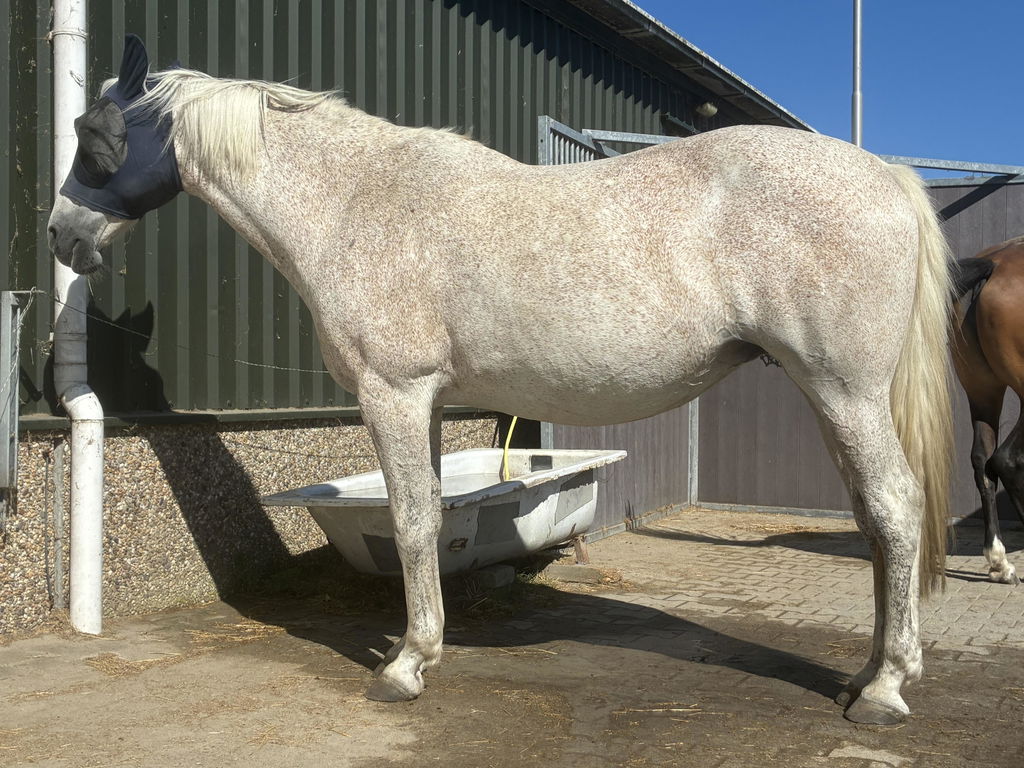

The cooler, shorter days can feel like a relief when your horse has spent the summer rubbing his mane, tail, or belly. Yet late fall is also the right time to look carefully at sweet itch nutrition. Not because a feed can solve an insect-related skin problem, but because a well-built ration gives the horse a steadier foundation while the skin recovers and before the next midge season begins.
Sweet itch is commonly used to describe an allergic skin response to the saliva of biting midges. Some horses react far more strongly than others. The first priorities remain practical insect control, suitable turnout management, skin care, and veterinary guidance where needed. Nutrition has a different role: it should support normal body condition, digestion, and the supply of nutrients involved in normal skin and coat maintenance, without adding unnecessary stress to the ration.
Start Sweet Itch Nutrition With the Whole Ration
When a horse is itchy, it is tempting to add one oil, powder, or herb after another. That can make the feed room busy without making the ration clearer. I prefer to start with what the horse eats in the largest quantity: forage.
A horse should have sufficient suitable forage spread over the day and night, with as few long fasting periods as possible. This supports normal digestive function and helps avoid the restless behavior that can make rubbing and management more difficult. The amount and type of forage must still suit the individual horse. An easy keeper, a horse with insulin dysregulation, or a horse prone to laminitis may need a carefully managed forage plan rather than unrestricted access.
Then look at the ration as a whole. Is the horse receiving only hay and a small scoop of a mixed feed? Is a grazing muzzle being used for weight control? Has turnout changed now that grass is less available? These details matter because a horse can appear well fed while still receiving an incomplete supply of vitamins, minerals, and quality protein.
This roughage-first way of thinking is central to my book, The New Feeding Concept. The aim is not to make a ration complicated. It is to first meet the horse's natural need for forage, then identify and fill genuine nutritional gaps.
Support Skin Without Chasing Miracle Ingredients
Skin is a living tissue. It depends on energy, protein, essential fatty acids, vitamins, and trace minerals, but that does not mean more is always better. A horse already receiving a correctly dosed, balanced vitamin and mineral supplement does not automatically benefit from several additional products containing the same nutrients.
Protein quality matters
A horse with damaged skin and a poor coat may be short of more than calories. Protein supplies amino acids, the building blocks used throughout the body, including for hair and skin. This is especially relevant for horses kept mainly on mature hay, those losing topline, older horses, or horses doing regular work.
The answer is not simply feeding a high-protein concentrate. First consider whether the forage is appropriate and whether the horse's total ration provides enough quality protein for his size, workload, and condition. Adding feed without checking the full picture can lead to excess calories, which is not helpful for a horse who is already overweight.
Fat can be useful, but introduce it thoughtfully
Some owners choose to add an omega-3-rich oil or a stabilized seed-based source of fat. This can be a practical way to add energy without a large starch meal and may support a healthy-looking coat. However, oil is still energy-dense. For an easy keeper, even a modest amount can gradually change body condition.
Introduce any new fat source slowly over at least several days, and adjust the rest of the ration if necessary. If you add meaningful amounts of oil, the vitamin and mineral balance should be reviewed rather than assumed to remain correct.
Vitamins and minerals need balance, not guesswork
Zinc, copper, vitamin E, and other nutrients have roles in normal skin, coat, and immune function. Deficiencies can occur when the ration is based on forage alone or when a low feeding rate of a fortified feed is used as though it were a full balancer. But supplementation should be based on what the horse is already receiving, ideally alongside forage analysis where that is available.
In my practice I often see horses with sweet itch receiving three or four supplements that all contribute trace minerals. The owner is trying hard to help, but overlapping products can create an unbalanced ration. A simpler plan is usually safer: suitable forage, an appropriately dosed balancer, and only targeted additions with a clear purpose.
Do Not Forget Weight, Gut Health, and Grazing
Sweet itch nutrition is not separate from the horse's metabolic health. Extra body fat can make management harder for many horses, while a horse that is underweight may need more carefully chosen calories and protein to regain condition. Regularly use a weight tape and body condition score rather than relying on appearance alone, especially as winter rugs can hide gradual changes.
For horses with insulin resistance, EMS, PPID, or a history of laminitis, discuss forage management and testing with your veterinarian or nutrition professional. These horses may also suffer from sweet itch, but their ration must remain appropriate for their metabolic needs. A high-sugar feed or unrestricted grass is not justified simply because the horse has skin discomfort.
Digestive comfort deserves attention too. Loose droppings, recurring girthiness, poor appetite, or marked changes in behavior are not things to explain away as itchiness. They may point to a separate issue that needs veterinary assessment. A calm, consistent feeding routine, sufficient forage, fresh water, and gradual feed changes are sensible basics for every horse.
A Practical Late-Fall Check
With midge pressure lower in many areas, late fall is a useful review period. Take a notebook to the feed room and write down every item your horse receives, including hay, pasture time, buckets, treats, oils, and supplements. Then record approximate amounts, not just scoops.
Next, assess your horse in front of you. Is he maintaining an appropriate body condition? Is his coat growing evenly? Is he eating forage well? Are rubbing areas healing, remaining sore, or becoming infected? Persistent open skin, swelling, obvious pain, fever, severe rubbing, or a sudden worsening of symptoms calls for a veterinarian. Feed should never replace diagnosis or treatment when a horse is uncomfortable.
A mare I advised had been receiving a generous mix of conditioning feed, oil, a skin supplement, and a mineral powder after a difficult summer of rubbing. By autumn she had gained more weight than was healthy, while the individual products created unnecessary overlap. We simplified her ration around analyzed forage, adjusted her calorie intake, and used one correctly dosed source of essential vitamins and minerals. That did not remove the need for midge control the following season, but it gave her owner a clear, manageable feeding plan.
Prepare Before Midges Return
The best time to improve a ration is before the pressure of spring and summer management returns. Keep changes gradual and give each adjustment time. A horse's coat, body condition, and manure are more useful guides over several weeks than dramatic promises on a label.
If you are considering a new supplement, ask three practical questions: What gap is it intended to fill? Does my horse already receive these nutrients elsewhere? And how will I know whether it is helping? If those answers are unclear, pause before adding it.
Your next useful step is to request personal nutritional advice so your horse's forage, condition, workload, and current supplements can be assessed together.