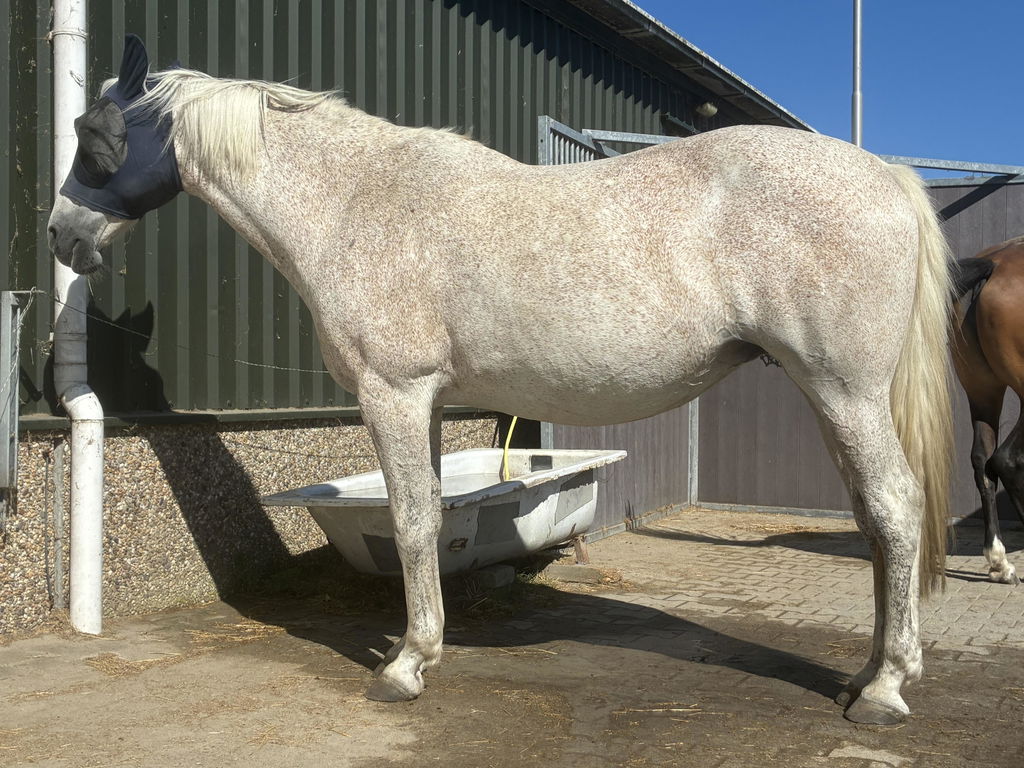

A horse was designed to spend much of the day eating small amounts of fibrous plant material. That simple fact should guide nearly every feeding decision. Horse digestion is not built around two large meals, a full bucket of concentrate, or long stretches without forage. It is a continuous process that works best when feed intake resembles the horse’s natural pattern as closely as practical.
For owners, this is more than an anatomy lesson. Understanding how the digestive tract handles forage, water, starch, and feeding changes makes it easier to assess a ration with calm, practical judgment. It also brings the focus back to the foundation of good feeding: suitable forage, offered in an appropriate amount, with the rest of the ration built around it.
Horse digestion starts with chewing
Digestion begins before feed reaches the stomach. A horse’s teeth grind forage into smaller particles while producing saliva. Unlike humans, horses produce saliva mainly while chewing. Long-stem forage therefore does more than provide fiber. It encourages the chewing time that supports the normal movement of feed through the digestive tract.
Hay, haylage, pasture, and other suitable forage sources vary widely. Their dry matter, fiber level, hygiene, maturity, and energy content can all differ. Two bales that look similar can contribute very differently to a ration. This is why a forage analysis, when available, is such a useful starting point, particularly for horses whose weight, workload, age, or condition requires closer management.
A horse that finishes its forage quickly may not necessarily need a bigger concentrate meal. First consider whether the forage amount, presentation, and access time fit the individual horse. Slow-feeding systems can extend eating time for some horses, but the mesh size, forage type, dental status, and the horse’s behavior all matter. A system that creates frustration or makes intake too difficult is not automatically the right solution.
A small stomach, then a long journey
The stomach is relatively small compared with the size of the horse. Feed does not remain there for long, which is one reason large, infrequent meals do not match the horse’s digestive design. From the stomach, feed moves into the small intestine, where nutrients such as protein, fat, and some carbohydrates are processed and absorbed.
Starch deserves thoughtful attention here. Grains and many concentrated feeds can be useful tools when a horse needs additional energy or when a ration needs balancing. Yet the amount, source, processing, meal size, and total daily intake all influence how a horse handles starch. The goal is not to label every concentrate as wrong. The goal is to use concentrates for a clear purpose and avoid allowing the bucket to displace the forage base.
When a horse needs more calories, owners often face a real trade-off. More feed may be necessary, but the type and distribution of that feed should still respect the digestive system. Dividing the daily ration into smaller meals, weighing feed rather than estimating by scoop, and reviewing forage quality can make a meaningful difference to feeding management.
The hindgut: where fiber earns its place
The cecum and large colon are collectively known as the hindgut. This is where a diverse population of microorganisms ferments plant fiber. In return, the fermentation process provides the horse with an important source of energy from forage.
This microbial community responds to what the horse eats and how consistently it is fed. Sudden changes in hay, pasture access, concentrate, or supplements can disrupt the routine the hindgut has adapted to. That does not mean every change must be avoided. Weather, forage supply, travel, training, and life stage all require adjustments at times. It does mean changes should generally be made gradually and with a clear plan.
A roughage-first ration supports the horse’s natural digestive pattern because it gives the hindgut the fibrous material it is designed to process. For many adult horses, forage is often offered at a minimum of around 1.5% of body weight in dry matter per day, although the appropriate amount depends on the horse, the forage, body condition, workload, and professional advice. Fresh grass contains much more water than hay, so weights cannot be compared directly without considering dry matter.
Water is part of the ration
Water is easy to overlook because it is not measured in a feed scoop, but it is central to normal feed intake and digestion. A horse’s water consumption can change with temperature, travel, work, forage type, salt intake, and individual habits. Horses eating dry hay commonly need more drinking water than those with access to moist pasture.
Fresh, clean water should be available at all times unless a veterinarian has given specific instructions otherwise. During cold weather, check that water is not too cold or inaccessible. During travel and competition, pay attention to whether the horse drinks from unfamiliar buckets or water sources. Some horses are noticeably selective, and planning ahead is kinder than discovering the issue after a long journey.
Salt also belongs in this conversation. Sodium is a normal part of a balanced ration, and individual requirements vary with sweat losses and work. A plain salt source and a thoughtfully balanced ration can be more useful than assuming a flavored lick alone covers every need.
Feed consistency matters as much as feed choice
Owners often search for one perfect feed, but daily consistency is frequently more valuable than chasing a new answer every few weeks. Horses benefit from regular feeding times, predictable forage access, and gradual transitions. The same principle applies when introducing a balancer or targeted supplement: review the whole ration first, then make one change at a time where possible.
This makes observation easier. Keep an eye on appetite, manure consistency, water intake, body condition, energy level, and how readily the horse eats its forage. These are practical signals, not a diagnosis. If a horse shows a persistent change in appetite, droppings, comfort, behavior, or general condition, consult a veterinarian promptly rather than trying to solve the issue by adding several products at once.
Dental care also deserves a place in a digestive plan. A horse with inefficient chewing may struggle to process forage as expected. Older horses, in particular, may need a ration adjusted for their teeth and their ability to chew. Soaked forage alternatives can be useful in some situations, but they should be selected and managed with professional guidance.
Build the ration from the ground up
The most useful feeding question is not, “Which supplement should I add?” It is, “What is this horse receiving from forage, and what is still needed?” Start by weighing the forage and concentrates, assessing the horse’s body condition, and considering workload, turnout, age, and individual needs. Then identify gaps that a suitable balancer or targeted product may help address.
This is the thinking behind The New Feeding philosophy, described by Equilin founder Annette in her book of the same name. It makes proper feeding clear again by returning attention to the horse’s natural roughage needs before adding nutrients with a specific role. A well-chosen supplement is most useful when it complements a sound base ration rather than compensating for one that has not been reviewed.
For growing horses, breeding stock, seniors, easy keepers, and horses in demanding work, the details will differ. There is no single bucket recipe for every horse. A forage analysis and advice from a qualified equine nutrition professional can be particularly valuable when the ration is complex or the horse’s needs are changing.
Make changes slowly and observe closely
A feeding plan does not need to be complicated to be careful. Weigh what you feed. Keep forage available as consistently as possible. Introduce changes gradually. Give the horse time to adapt before deciding whether a ration is working, unless there is a concern that requires veterinary attention.
Horse digestion responds best to the quiet discipline of good daily management. When forage remains the center of the ration and every addition has a reason, feeding becomes less about chasing quick fixes and more about giving the horse a pattern it can thrive on day after day.