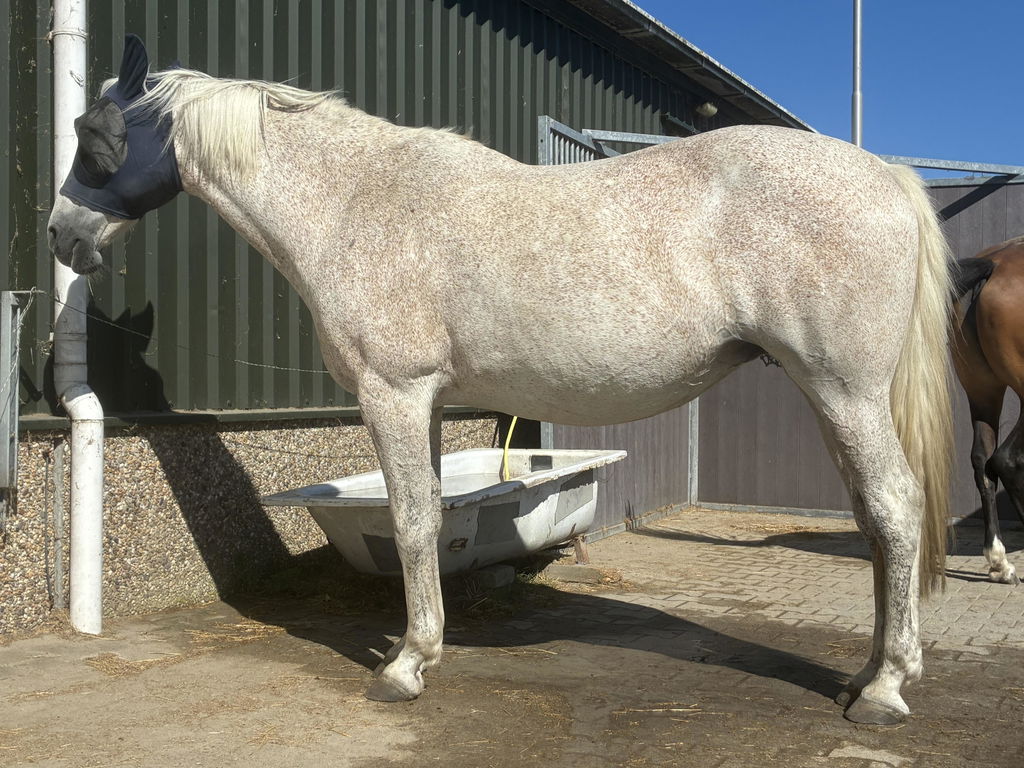

A horse can look well fed and still have a ration that is incomplete. A full hay net, a scoop of feed, and a shiny coat do not automatically tell you whether the essential horse nutrients are present in the right amounts. The useful question is not, “What supplement should I add?” It is, “What does this individual horse receive from forage first, and what is still missing?”
That distinction makes feeding more manageable. Horses are designed to spend much of the day consuming fiber-rich forage. Everything else in the ration should build on that natural starting point, taking account of the horse’s body weight, forage quality, work, age, condition, and access to pasture.
Essential horse nutrients start with forage
Forage is not merely something to fill the stomach between meals. Hay, haylage, grass, and other suitable fiber sources provide the base of the daily ration. They contribute energy, protein, minerals, and the chewing time that belongs in a horse’s normal feeding pattern.
The amount and quality matter just as much as the type. A late-cut grass hay may provide a very different nutrient profile from early-cut hay or a mixed pasture. Two horses eating the same number of flakes may therefore receive quite different rations. When practical, a forage analysis replaces guesswork with useful numbers, especially for horses with high needs, restricted grazing, or carefully managed body condition.
Water belongs beside forage as a constant priority. Clean, readily available water is required every day, and intake can shift with weather, travel, salt intake, work, and whether the horse is eating dry hay or fresh grass. A horse cannot make good use of a carefully planned ration if water access is inconsistent.
Fiber and energy are related, but not identical
Forage supplies fiber, but its energy contribution can vary greatly. Some horses maintain condition easily on good forage and a balanced vitamin and mineral source. Others need additional energy because of their workload, growth, lactation, age, or difficulty maintaining condition.
More calories are not automatically the answer. Adding a large amount of cereal-based feed may change the balance of the whole ration. The right approach depends on the horse, the forage, and the purpose of the added feed. Changes should be gradual, with the horse’s appetite, manure, body condition, and daily behavior observed closely.
The nutrients a balanced ration must provide
A complete ration provides energy, protein, fat, vitamins, minerals, and water in suitable proportions. These categories work together, so focusing on one number - such as protein percentage or calories per scoop - can create a misleading picture.
Protein and amino acids
Protein supplies amino acids, the building blocks used throughout the body. The amount needed is influenced by life stage and workload. Growing horses, broodmares, and horses in demanding training may require more attention to both the quantity and quality of dietary protein than a mature horse doing light work.
Not every horse benefits from a high-protein concentrate. If forage already supplies adequate protein, adding more may not improve the ration. What matters is whether the full diet meets the horse’s needs without unnecessarily displacing forage or oversupplying other nutrients.
Fats and carefully chosen energy sources
Fat is an energy-dense nutrient that can be included when a horse needs more calories without a large increase in feed volume. It also contributes essential fatty acids. However, it is still only one part of the ration, not a substitute for sufficient forage, protein quality, or mineral balance.
Energy sources should suit the horse’s temperament, workload, and feeding management. A quiet older horse, a young horse in development, and a fit sport horse may all need different solutions, even when their body weights are similar.
Vitamins, minerals, and salt
Vitamins and minerals are required in small amounts, but their role in the ration is substantial. Calcium and phosphorus, for example, need to be considered together rather than added independently. Trace minerals such as copper, zinc, selenium, iodine, and manganese must also be supplied appropriately, because forage levels vary by soil, region, season, and storage.
This is why a broad vitamin and mineral balancer can be useful when forage makes up most of the diet or when concentrate feed is fed below its recommended amount. A balancer is intended to fill nutritional gaps, not to compensate for poor forage management or an unsuitable overall ration.
Salt deserves its own place in the plan. Horses need sodium and chloride, yet many forage-based diets are low in salt. A plain salt source should be available, while the need for additional electrolytes depends on sweat loss, climate, and work. A salt block can be helpful, but it does not allow you to know precisely what an individual horse consumes.
Build the ration in the right order
Feeding becomes clearer when decisions are made in sequence. Start by estimating the horse’s body weight and assessing its current body condition. Then establish how much forage the horse eats in 24 hours, including pasture. Only after that should you assess whether its energy, protein, vitamin, and mineral intake needs adjustment.
Next, look at the feed label as part of the entire ration rather than in isolation. A product may be formulated to provide meaningful levels of nutrients only when fed at a particular daily amount. If a horse receives a small handful for taste or mixing purposes, it may not receive the vitamins and minerals shown on the bag in sufficient quantities.
Finally, keep the plan simple enough to follow every day. Multiple products can overlap in vitamins, minerals, or herbs, making it harder to know what the horse actually receives. Targeted feeding is usually more useful than adding several products with similar purposes.
When needs change, reassess the ration
A horse’s nutrient needs are not fixed for life. A change in pasture, a new hay delivery, reduced turnout, an increase in training, pregnancy, growth, aging, travel, or seasonal weather can all justify another look at the ration.
Young horses need special care because growth is not simply a matter of feeding more. Their ration should be planned to provide steady, appropriate energy alongside balanced protein, vitamins, and minerals. For older horses, chewing efficiency, forage preference, body condition, and the practicality of feed format can become more relevant. For performance horses, the total picture includes forage availability, recovery time between sessions, sweat loss, and how reliably the horse eats while away from home.
There is no single “best” ration for every horse. The right feeding plan is one that meets the individual horse’s daily needs, respects its forage requirement, and remains realistic for the person responsible for feeding it.
Use products to correct a defined gap
Supplements and balancers are most valuable when they have a clear job. Before adding one, identify the gap you are trying to address: Is the horse receiving enough vitamins and minerals from its current feed amount? Does the ration need a more suitable source of concentrated nutrients? Has a change in forage altered the plan?
At Equilin, The New Feeding philosophy places roughage first and then uses targeted nutrition to help bring the base ration into balance. Annette’s book, The New Feeding Philosophy, offers a practical framework for looking beyond individual scoops and toward the full daily ration.
A veterinary professional or qualified equine nutritionist can be especially helpful when a horse has complex feeding needs, when forage analysis results are available, or when several feeds and supplements are already being used. Bring complete information: forage type and amount, pasture access, every feed and supplement, feeding quantities, the horse’s age, weight estimate, workload, and recent changes.
The best feeding plan rarely looks dramatic. It starts with enough suitable forage, provides clean water and salt, corrects genuine nutrient gaps, and is reviewed when the horse’s life changes. That quiet consistency is what gives a horse the best chance to thrive in its everyday work, rest, and routine.