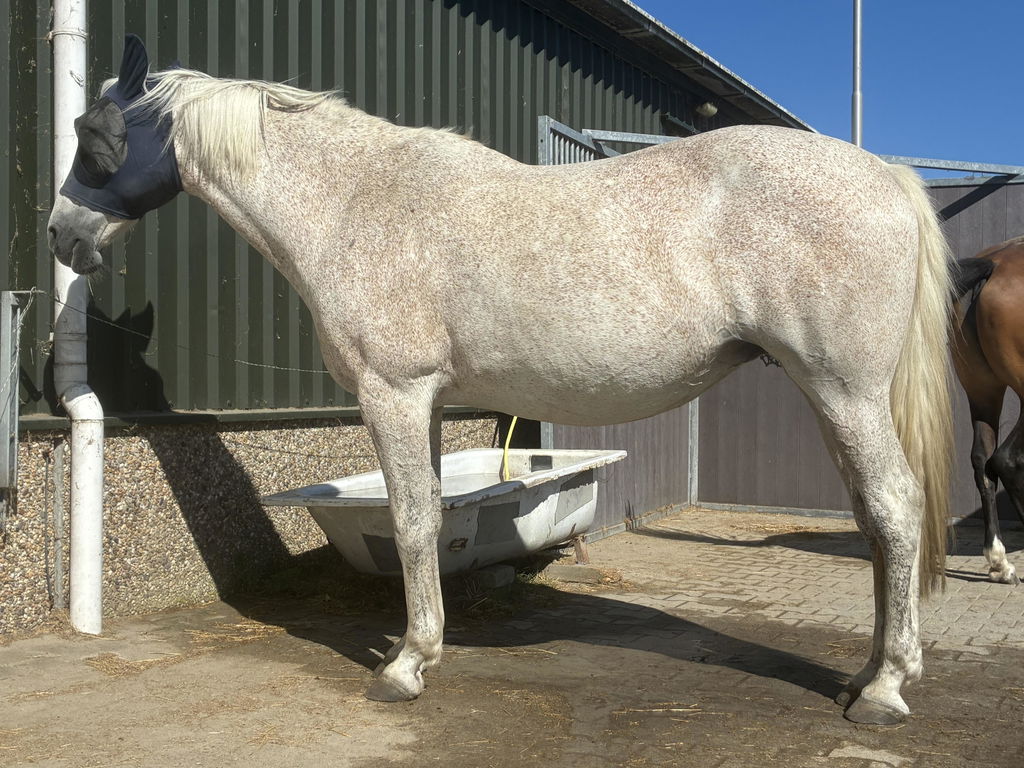

A glossy tub and a long ingredient list do not make a supplement right for your horse. The best horse feed additives begin with a clear look at what is already in the bucket, in the hay net, and in the pasture. When the foundation is unclear, adding more products can make feeding more expensive and less balanced.
For most horses, nutrition should start with sufficient, suitable roughage and clean water. Additives and supplements have a valuable place, but they work best when they fill a defined gap in an otherwise thoughtful ration. This approach makes proper feeding clearer again: feed the horse first, then choose nutrients with a purpose.
What makes a horse feed additive worth using?
A feed additive should have a specific role. It may help balance the vitamin and mineral content of a forage-based ration, improve the palatability of a feed, or provide targeted nutritional support during a life stage or management change. It should not be used as a shortcut around insufficient hay, abrupt feeding changes, poor forage hygiene, or an unbalanced concentrate ration.
The most useful choice depends on the individual horse. A hardy pony living mainly on good grass hay has different needs from a growing youngster, a horse in regular training, or an older horse whose appetite and chewing habits have changed. A product that suits one horse beautifully can be unnecessary for another.
Look beyond front-label promises. A responsible product clearly communicates its intended use, ingredients, feeding amount, and how it fits into the total ration. It should also be practical to feed consistently. A supplement that is routinely left at the bottom of the bucket cannot contribute much, however carefully it was formulated.
Start with the forage before adding anything
Roughage is the center of the horse's daily diet. Hay, haylage, grass, and other appropriate fiber sources supply more than calories. They shape eating time, support normal chewing, and form the basis on which the rest of the ration should be built.
Before selecting an additive, consider the type and amount of forage offered, the horse's body condition, workload, access to pasture, and any existing compound feed or balancer. If possible, a forage analysis offers useful information about energy, protein, and mineral levels. Without one, it is wise to be cautious about making large assumptions or stacking several fortified products.
This roughage-first principle is at the heart of Annette's book, The New Feeding. Its central message is simple but often overlooked: modern feeding becomes easier to manage when the horse's natural need for fiber comes first and additions are chosen to correct identifiable gaps.
The best horse feed additives serve a clear purpose
Rather than searching for one product that does everything, organize your choices around the horse's actual ration and current needs. The following categories can be helpful when used thoughtfully.
Vitamin and mineral balancers
A concentrated vitamin and mineral balancer can be a sensible option for horses receiving mostly forage, especially when they eat little or no fortified concentrate feed. The goal is not to create a more complicated diet. It is to provide essential micronutrients in a controlled amount without adding unnecessary calories or a large volume of feed.
Balance matters here. Combining a balancer with several fortified feeds, mineral blocks, and separate vitamin products can lead to duplication. Check labels for the total daily intake, not just the attractiveness of each individual product.
Support for forage digestion and feed intake
Changes in turnout, travel, training schedules, forage batches, or stable routines can affect how comfortably a horse settles into its feed. Plant-based ingredients and carefully selected fiber-focused products may be used as part of a calm, consistent feeding routine.
The practical basics still come first: make changes gradually, divide hard feed appropriately, allow enough forage, and ensure fresh water is always available. An additive is most meaningful when those daily habits are already in place.
Magnesium and focused nutritional support
Some owners consider magnesium-containing products for horses whose rations may not provide enough of this mineral, or during periods where targeted nutritional support is desired. However, behavior alone is not a reliable basis for choosing a supplement. A horse that seems tense, unsettled, or difficult to ride may be responding to training, management, turnout, saddle fit, discomfort, or many other factors.
A focused product can have a place, but it should be selected after reviewing the complete ration. More is not automatically better, particularly when several products contain overlapping minerals.
Nutrition for growth, age, and changing workloads
Young horses, broodmares, senior horses, and horses returning to work all require careful ration planning. Growth needs steady, appropriate nutrition rather than rapid condition gain. Older horses may need a ration that is easier to chew and consume, while horses in more demanding work may need adjustments to energy, protein, electrolytes, and micronutrients.
These are situations where a targeted supplement can be useful, but they are also situations where professional nutritional guidance is especially worthwhile. The aim is a ration that remains balanced over time, not a collection of products added in response to every change.
How to compare products without getting lost in the label
Start by writing down everything your horse receives each day. Include forage, grazing, bucket feed, treats, salt, mineral licks, oils, and all supplements. Record the actual amounts, not the intended scoop size. This simple exercise often reveals overlap or shows that a horse is receiving a nutrient-dense feed at a very low amount.
Next, ask what problem you are trying to solve. Is the base ration short on vitamins and minerals? Is the horse reluctant to eat a new forage batch? Is there a genuine life-stage requirement? If the answer is vague, pause before buying another product. Clear goals make it easier to evaluate whether a supplement earns its place.
Then assess quality and feeding practicality. Choose products with transparent ingredient information, realistic serving sizes, and responsible manufacturing standards. Consider how easily the product can be introduced and whether its flavor and texture suit your horse. For competition horses, check that your feeding program is appropriate for the rules of the organization in which you compete.
Finally, introduce only one meaningful change at a time where practical. That makes it easier to monitor appetite, manure consistency, body condition, energy intake, and overall acceptance of the ration. Keeping a short feeding diary can be more useful than relying on memory after several busy weeks.
Common mistakes when choosing horse feed additives
The first common mistake is supplement stacking. A horse can quickly end up receiving a fortified mix, a balancer, a mineral powder, a calming blend, and several treats with added nutrients. Each item may sound sensible alone, yet together they may create an unnecessarily complicated ration.
The second is feeding a product at less than the recommended amount while expecting the full nutritional contribution. Some feeds and supplements are designed to deliver their listed nutrients only at a particular daily intake. If a horse needs fewer calories, a concentrated balancer may be more appropriate than a small token portion of a complete feed.
The third is expecting a feed additive to compensate for management. No supplement replaces adequate forage, dental care, gradual transitions, turnout appropriate to the horse, or a well-planned workload. Thoughtful nutrition works alongside good horsemanship.
Equilin's approach is to make these decisions easier through a structured, roughage-first feeding philosophy: establish the base ration, identify the gap, and select only the targeted support that adds value.
When to ask for individual advice
Seek qualified nutritional or veterinary input when a horse has a complex feeding history, marked changes in appetite or condition, is pregnant or lactating, is growing rapidly, or has multiple products in the ration already. The same applies when a horse's eating behavior changes suddenly. Nutrition is one piece of the picture, and a prompt assessment helps prevent guesswork.
The right additive should make the daily ration more precise, not more confusing. Begin with forage, keep the feeding plan simple enough to follow every day, and let each product have a clear reason for being in the bucket.