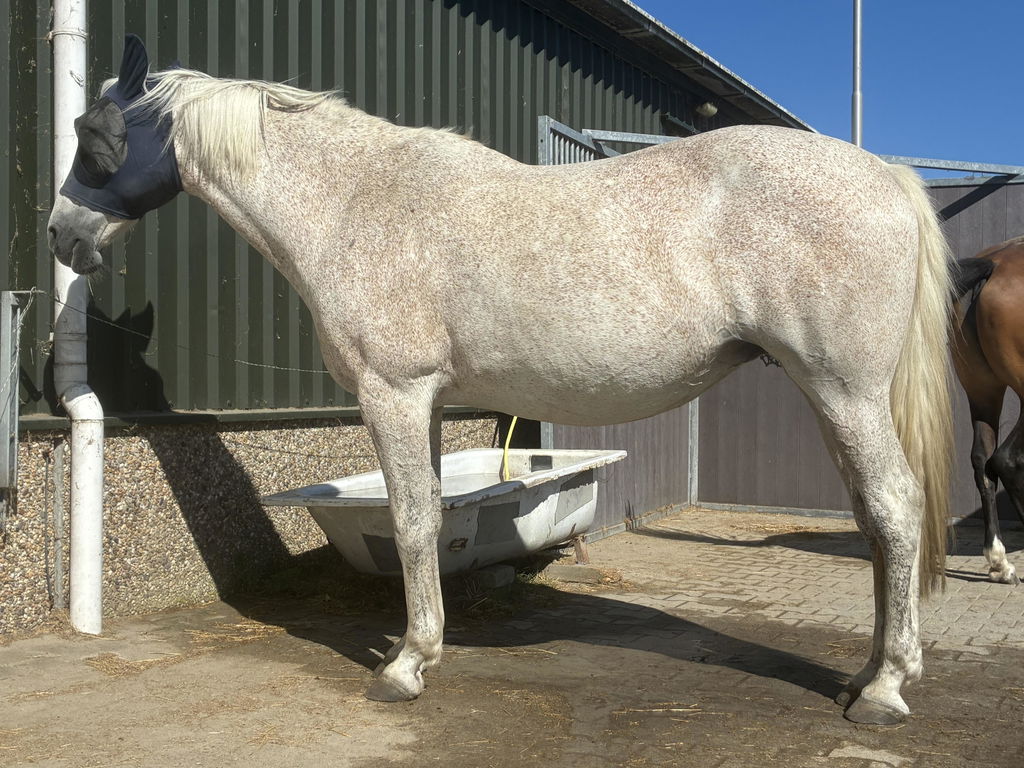

The hay net is empty before morning turnout, your horse has picked through the remaining strands of hay, and you are wondering whether another scoop of feed would help. In many cases, the better starting point is not a larger bucket meal. It is a roughage based feeding plan that looks first at what the horse is actually eating over 24 hours.
Horses are designed to spend much of the day eating fibrous plant material. That steady intake supports normal chewing, saliva production, gut movement, and a calmer feeding rhythm. Yet roughage-first does not mean that every horse should simply receive unlimited hay, nor does it mean that hay alone completes every ration. The right plan depends on forage quality, body condition, workload, health history, and the time of year.
As late fall turns into winter, horses often move onto stored forage more fully. This is a useful moment to reassess the ration. A new batch of hay can look and smell good while supplying very different levels of energy, protein, sugar, and minerals from the previous batch.
Start With the Forage, Not the Feed Room
A roughage-first ration begins by identifying every source of forage your horse receives: hay, haylage, grass, straw, and fiber-based feeds. Then consider both quantity and quality. Owners often know how many flakes they feed, but flakes vary greatly in size and density. Weighing the daily amount for a few days gives a far more reliable picture.
For many adult horses, a starting point is forage at around 1.5% to 2% of body weight per day on a dry-matter basis. That is a starting point, not a universal prescription. A 1,100-pound horse receiving dry hay that is about 85% dry matter might need roughly 19 to 26 pounds of hay as fed, depending on its individual needs. A horse living on wetter haylage needs a larger weight of forage to receive the same dry matter.
Horses that gain weight easily, particularly those with insulin dysregulation, EMS, or a laminitis history, need a plan tailored to their forage analysis, body condition, and veterinary guidance. Restricting forage too sharply can create long gaps without fiber, which is rarely helpful. In these cases, the goal is usually to select suitable forage, manage intake carefully, and maintain as much chewing time as practical.
At the other end of the scale, an older horse, a hard keeper, or a horse in demanding work may struggle to maintain weight on average hay alone. The answer may be more digestible fiber, a higher forage allowance, or a carefully chosen addition to the ration. It should not automatically be a large amount of cereal-based concentrate.
Ask What the Hay Is Really Providing
A forage analysis is one of the most useful tools in a feeding plan, especially when your horse has recurring loose droppings, weight changes, muscle concerns, or a metabolic condition. It can show dry matter, energy, protein, sugar, starch, and key mineral levels. Without that information, it is easy to add supplements blindly while missing the main issue.
For a horse with PPID, insulin resistance, or a tendency to laminitis, the sugar and starch content of forage deserves particular attention. For a horse with muscle problems such as PSSM or tying-up episodes, the whole ration needs review rather than a single ingredient being blamed. Work level, forage energy, protein quality, mineral balance, and the structure of the daily routine all matter.
If your horse has acute pain, colic signs, sudden lameness, marked appetite changes, or suspected ulcers, contact your veterinarian promptly. Feed management can support daily well-being, but it does not replace diagnosis or veterinary care.
Fill Nutrient Gaps With Purpose
Forage should form the foundation, but it is not automatically a complete ration. Hay is often low or uneven in minerals such as copper, zinc, selenium, and iodine. Vitamin E may also need attention when there is little or no fresh grass. The visible condition of a horse cannot reliably tell you whether these nutrients are balanced.
This is where a concentrated balancer can be useful. It provides vitamins, minerals, and selected supporting nutrients without turning the bucket feed into the main calorie source. The amount should match the horse's forage intake and the nutrients already present in any other feeds. More is not better. Combining several fortified products can create unnecessary overlap.
In my practice I often see owners feeding a vitamin-mineral product, a hoof supplement, a calming powder, and a performance mix at the same time. Each was chosen with good intentions, but together they may provide far more of certain nutrients than intended. A simpler ration built around analyzed forage and one appropriate balancer is often easier to assess and maintain.
For horses on a largely forage-based ration, a small carrier feed can make supplementation practical. Soaked unmolassed beet pulp, a low-starch fiber mash, or a small portion of chaff may suit some horses. Choose the carrier according to the horse, not according to fashion. A horse prone to excess weight needs a different approach from a horse that needs more condition.
Putting a Roughage-Based Feeding Plan Into Practice
The daily routine matters as much as the ingredients. Aim to avoid long periods with nothing to chew, while still respecting the horse's individual energy requirements. Slow feeders can extend eating time for some horses, but they should be checked carefully. A very restrictive net can frustrate a horse, create excessive effort, or be unsuitable for a horse with dental limitations.
A practical winter routine might involve weighed hay divided across turnout and stable time, with the longest gap covered overnight. If the horse comes in from pasture, make sure forage is already available rather than waiting until the evening feed round. For horses that work, offering suitable forage before exercise can be preferable to exercising on an empty stomach. The exact timing depends on the horse, the type of work, and how much forage it comfortably eats beforehand.
A mare I advised had loose droppings that appeared most often after her barn switched from late-cut hay to a richer haylage batch in the fall. Her owner had added several digestive products, but the mare's ration had never been measured. We first weighed the haylage, reviewed how long she went without forage during turnout, and arranged forage analysis. The final plan was not complicated: a more consistent fiber intake, a simplified bucket feed, and a ration adjusted to the new forage. Her veterinarian remained involved because loose droppings can have several causes, but the feeding picture was finally clear enough to make sensible decisions.
Review the Horse, Not Just the Feed Chart
A good feeding plan is reviewed regularly. Take body-condition photos from the side and behind every few weeks, ideally in similar light. Use a weight tape as a trend tool, observe manure consistency, note appetite and drinking, and record changes in workload or turnout. These observations are more useful when written down than when left to memory.
Be particularly alert when the forage batch changes. The shift from pasture to stored forage in late fall, a new delivery of hay, reduced exercise because of weather, or a move between barns can all alter the ration. Introduce changes gradually where possible, especially with sensitive horses.
The same principle applies to supplements. Ask what each product is contributing and what need it addresses. If the answer is unclear, pause before adding another one. Proper feeding becomes clearer when the foundation is visible: forage amount, forage analysis, horse type, and realistic daily management.
For a fuller explanation of this way of thinking, my book, The New Feeding Concept, sets out how to build the ration from the horse's natural feeding behavior outward. The aim is not to make feeding complicated. It is to stop guessing and give each horse what it genuinely needs.
Your next step is to request personal nutritional advice and review your horse's forage, current feed, body condition, and daily routine together.